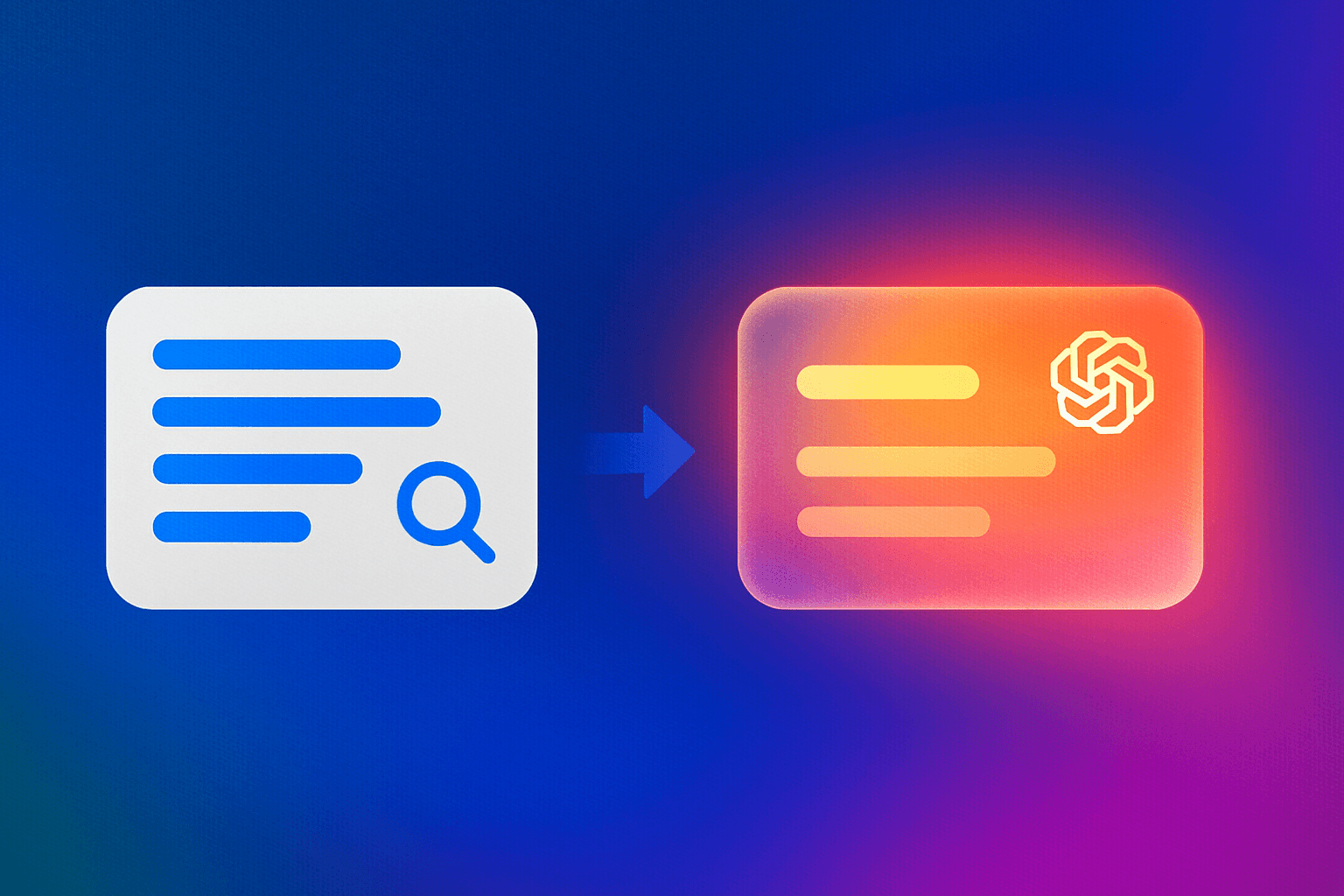
SEO has shaped how we write for the web for years. You target keywords, optimize pages, earn backlinks and try to rank higher than competitors. But search is no longer just a list of links. AI tools like ChatGPT, Gemini, Claude and Google’s generative results are increasingly answering questions directly insted of users ever clicking a website.
"Content is no longer only competing for rankings. It’s competing to become part of the answer."
What Is GEO?
Generative Engine Optimization (GEO) is the practice of creating content that AI systems can:
understand easily
trust as reliable
extract as a source
reuse in generated answers
SEO is about visibility in search results. GEO is about visibility inside AI responses.
Why GEO Matters Now
Search behavior is changing fast:
Queries are longer and more conversational
Users want instant answers, not ten options
AI assistants are becoming discovery tools
Even if your page ranks well, AI may summarize the topic without sending traffic your way.
So the goal expands: Don’t just rank, become the referenced source.
SEO vs. GEO: The Core Difference
SEO | GEO |
|---|---|
Focus on keywords | Focus on concepts and entities |
Compete for rankings | Compete for inclusion in answers |
Optimize for clicks | Optimize for citation and extraction |
Page-level performance | Topic-level authority |
SEO gets you found. GEO gets you used.
How Content Needs to Change
1. Write for Questions, Not Just Keywords
Instead of targeting phrases like:
“SEO strategy 2026”
Focus on real queries like:
How do AI search engines choose sources?
What makes content quotable?
Use question-based headings and direct answers.
2. Make Content Easy to Extract
AI engines pull clean blocks of information.
So include:
short definitions
step-by-step frameworks
bullet lists
clear structure
Example:
GEO is optimizing content so generative engines can cite it in AI answers.
Simple, direct, reusable.
3. Build Topical Authority, Not Isolated Posts
AI search favors depth over scattered content.
Instead of publishing disconnected articles, create clusters that reinforce expertise:
core guide
supporting subtopics
internal linking
consistent terminology
Think ecosystem, not one-off keywords.
4. Trust Signals Matter More Than Ever
Generic content won’t survive AI filtering.
AI engines prioritize pages with:
firsthand experience
examples and specificity
clear expertise
original insight
If your article could be written by anyone, it won’t stand out.
5. Optimize for Citation, Not Just Traffic
In GEO, the win isn’t only a click.
It’s being referenced.
Write in a way that AI can quote:
“The process involves three steps…”
“The main difference is…”
“A strong strategy includes…”
Clarity beats cleverness.
6. Refresh Content for AI Search
Older SEO content often needs updates.
A GEO refresh includes:
adding concise answer sections
improving structure
expanding depth
updating examples
making content more quotable
The New Standard: Content That Becomes the Source
SEO isn’t going away.
But it’s no longer the full game.
In AI-first search, visibility comes from being:
trusted
structured
useful
extractable
Because the future isn’t only about ranking pages.
It’s about becoming the information AI chooses to reuse.